Built to Last: Foundation 4 of 7
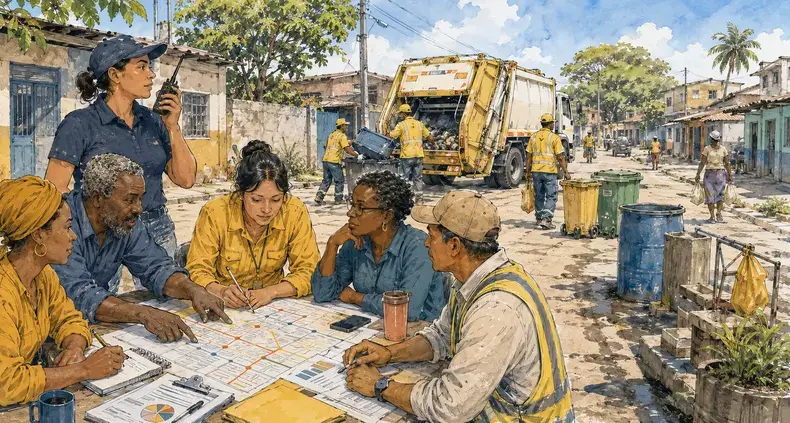
People are at the heart of every waste system. Yet engagement often begins after important decisions have been made, or reaches only the people who are easiest to find and most confident about speaking.
In this Built to Last webinar, international development practitioner Anna de Chavez explains why meaningful engagement must begin early enough to test and shape a programme, rather than simply asking people to approve decisions that have already been taken.
Drawing on her work with women waste workers and entrepreneurs in the Philippines and Indonesia, Anna shows how power, trust and unequal access affect participation. She explains how listening to less visible voices changed the support provided, improved decisions and helped build services that people could genuinely use and support.
Built to Last is produced by Global Waste Lab in partnership with be Waste Wise. Global Waste Lab is a Knowledge Partner of the 2026 ISWA World Congress, hosted by CIWM, which has endorsed the webinar series for continuing professional development.
Watch the full webinar
Zoë Lenkiewicz and Anna de Chavez discuss how thoughtful, inclusive engagement can improve decisions, reveal risks and build the trust needed to make waste systems work.
Key takeaways
Look beyond the loudest voices
The people most comfortable speaking are not necessarily those most affected. Meaningful inclusion requires actively finding out who is missing and what prevents them from participating.
Use engagement to test the design
Engagement should happen while people’s knowledge can still influence decisions. Sometimes it confirms the original approach; sometimes it reveals that the project has misunderstood the problem.
Make engagement better, not bigger
Large consultations are not always necessary. Regular conversations, workplace visits and small-group discussions can produce richer insights while placing fewer demands on participants and project teams.
Close the feedback loop
Tell people what you heard, what changed and what could not change – and explain why. This builds trust, strengthens accountability and shows that participation was taken seriously.
“Waste systems are built by people, so they must be built with people.”
Short insights from the webinar
Listen before assuming you know the answer
Anna explains why experts need to listen with humility and focus less on their own ideas and more on what communities say they need.
Build trust before inviting participation
Anna explains why trusted local partners, community leaders and local government relationships matter before people will feel confident enough to take part.
Read the full transcript
Read the edited transcript of the conversation between Zoë Lenkiewicz and Anna de Chavez below.
Show full transcript
Inclusive engagement: webinar transcript
This transcript has been edited for clarity and concision. Names and technical terms have been corrected, and webinar administration, poll mechanics, repetition and false starts have been removed. The substance of the conversation has not been changed.
Zoë Lenkiewicz: Across our first three Built to Last sessions, Mayor Talib Ahmed Bensouda showed us how leadership and governance create the conditions for progress. Pushkar Pradhan showed us how evidence supports better decisions, and Lakshmi Menon helped us look beyond the technology to consider whether a solution fits the whole system around it.
Today we take the next step. If a solution is supposed to fit the local context, who gets to define that context? Whose knowledge shapes the decision? Are people involved early enough for what they say to make a difference?
Built to Last explores Global Waste Lab’s Seven Foundations of a Resilient Waste System. The framework was developed through field experience and research undertaken for the United Nations Global Waste Management Outlook 2024.
Today we are focusing on the fourth foundation: inclusive engagement. I have grouped it into three practical ideas.
First, include the people who use, deliver and are affected by the waste system. Participation must be designed so that people who are often overlooked, or who face practical barriers, can take part meaningfully.
Second, engage before the main decisions are fixed. Telling people what will happen is communication. Asking them to approve it is consultation. Engagement becomes meaningful when people’s knowledge can still change the design.
Third, close the loop. Record what people say, explain how it influenced the decision and be honest about the constraints. Engagement does not guarantee consensus, but it should create greater understanding, accountability and trust.
I am delighted to welcome Anna de Chavez, an international development practitioner working in Southeast Asia. Anna’s experience spans social enterprise development, development finance, women’s economic empowerment, training and coaching.
Through USAID’s Clean Cities, Blue Ocean programme, Anna led Women in Waste Economic Empowerment work in the Philippines and Indonesia, supporting women-owned and women-led waste enterprises and helping to strengthen the wider environment in which they operate.
Anna, thank you for joining us and bringing the fourth foundation to life.
Anna de Chavez: Thank you, Zoë. It is an honour to be part of this webinar.
I want to begin with something that sounds simple but has significant implications for how we design waste programmes. One mistake we can make is assuming that the people who speak most loudly in a meeting represent everyone. They do not necessarily.
Think about a typical stakeholder consultation. You might have government representatives, technical experts, private-sector representatives, community leaders and perhaps some representatives of waste workers.
The people who are most comfortable speaking might be those who already have authority, confidence, information or institutional access. However, the people most affected by a waste system might not be the people speaking most.
An informal waste worker might be thinking about losing access to recyclable materials. A woman entrepreneur might be thinking about whether she can afford to attend a training session. A household might be concerned about collection schedules. A small business might be concerned about the cost of complying with new requirements.
Those perspectives can easily disappear if we rely only on the people who are most visible.
This was particularly important in the Women in Waste Economic Empowerment activity. Women working in the informal waste sector were often central to waste recovery, but they could also be invisible in programme and policy discussions. We therefore had to be intentional about reaching them.
We adjusted meeting and training schedules around their working hours and household responsibilities. We worked through trusted local organisations, including local government units and civil society organisations, and used familiar settings within their communities.
In Semarang, Indonesia, staff from an implementing grantee would wait in the field to speak to travelling informal waste workers because those workers did not have regular routes. We needed their baseline information before developing the curriculum and workplan.
We also used participatory approaches that created more comfortable spaces for people to share their experiences.
Saying that everyone was invited is not the same as ensuring that everyone was able to participate. Even participation itself is not enough. We need to ask who is missing, why they are missing and what would make it possible for them to participate meaningfully.
Inclusion has to be designed into the engagement process. This means thinking about time, location, language, confidence, power dynamics, cost and trust. Perhaps most importantly, it means not assuming that the most confident voice in the room is the most representative voice.
When we create the conditions for less-heard voices to participate, we might discover that our original understanding of the problem was incomplete.
Sometimes we enter a project with a clear idea of what the problem is. Because we already have a project design, theory of change, budget and deliverables, there can be a tendency to concentrate on implementing what was originally planned.
Engagement can challenge those assumptions.
In the Women in Waste Economic Empowerment activity, there was an expectation that women waste entrepreneurs would benefit significantly from equipment and grants. Those things were relevant, but when we engaged with the women entrepreneurs, we heard something more nuanced.
They consistently identified the need to be recognised by local government as authorised waste collectors. They wanted the confidence to negotiate, greater financial literacy, access to markets, opportunities to work collectively, better business planning, working capital and support from local mentors.
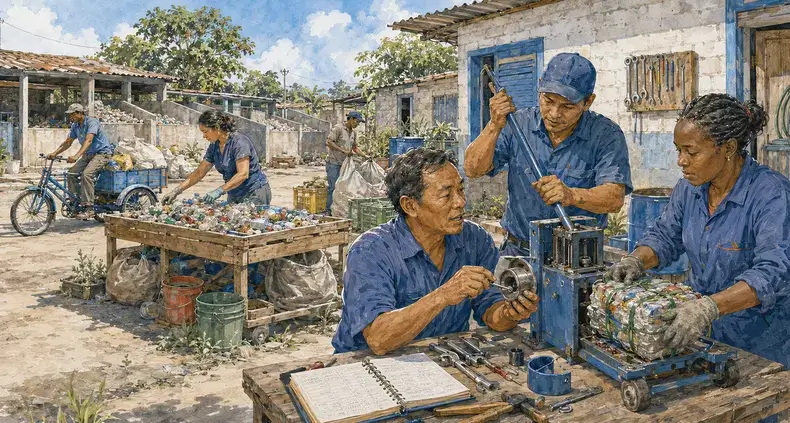
They also needed equipment and tools that were suitable for their working environments and easy for women to use.
This was important because it showed us that the constraint was not simply a lack of physical assets. Their perspectives directly shaped the mentoring programme and enterprise support package.
That is a much more meaningful definition of engagement. It was not simply that we asked the women what they wanted and they gave us a list. We listened, and what we learnt caused us to rethink how we supported them.
Project teams should be comfortable with this. Sometimes engagement confirms the original design. At other times, and perhaps more importantly, it shows us that the design has misunderstood something.
We might have defined the wrong constraint or be trying to solve the wrong problem. We might have overlooked a market issue. We might have assumed that infrastructure was the solution when the real constraint was organisational capacity or access to finance.
I would encourage project teams not to treat engagement as a process for getting people to agree with the design. Use engagement to test the design and be prepared to change it when the evidence tells you to.
The obvious response from a project team might be, “That sounds great, but we do not have enough time or money for extensive engagement.”
One of the biggest misconceptions about inclusive engagement is that it requires large stakeholder consultations. It does not. If you have limited time and resources, do not try to make engagement bigger. Make it better.
You do not necessarily need a room containing 100 people or a large number of workshops. You might learn more by visiting an enterprise and speaking to the people who operate it. You might learn more from a focused conversation with waste workers than from a large, formal workshop.
You can use existing community meetings, hold short feedback conversations during implementation visits and speak to people through trusted local organisations. The important thing is that engagement is intentional and continuous.
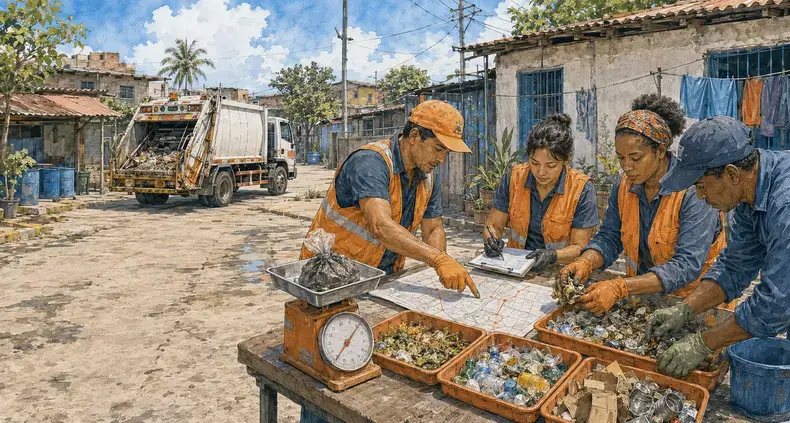
Our experience was that small but regular conversations could provide valuable insights without creating significant additional administrative burdens. I made a point of observing training sessions and visiting women entrepreneurs in their workplaces.
Engagement should continue throughout implementation, not only at the beginning. People’s needs and circumstances change. Markets, relationships and policies change. What appeared to be the right intervention at the beginning might not work as expected once implementation starts.
We should create opportunities to ask what is working, what is not working, what has changed, what we are missing and what we should adjust.
We must also think about accessibility. If we always hold training or meetings during working hours, during the time people need for their families, or in government offices, and if we use technical language, long presentations and formal speaking arrangements, we should not be surprised when only the usual voices participate.
Sometimes improving engagement simply means making it easier for people to participate.
We brought meetings and training into communities. We used local languages, visuals and tools that were accessible to people with different needs. We provided stipends and childcare so that women could concentrate on learning and participating. We adjusted grant-funded equipment as we learnt more about what was suitable for them.
Project teams do not necessarily need more engagement activities. They need better engagement moments built into the activities they are already undertaking.
There is one critical factor that determines whether people will continue to trust the engagement process: what happens after they speak?
This is one of the most overlooked parts of engagement. We ask people for their views, take notes and thank them for participating. The project team then goes away and makes decisions, but the people who participated might never discover what happened to their input.
That is where trust is lost.
For me, closing the feedback loop is part of inclusion. There should be a simple process: listen, record, decide and explain.
Tell people what you heard and what changed. Importantly, tell them what could not change and why.
Meaningful engagement does not mean that every request will be accepted. Stakeholders have different interests. Waste workers might want one thing, while local government has regulatory requirements or different priorities. Conflict is inevitable.
The goal is not necessarily to achieve complete agreement. The goal is to create opportunities for stakeholders to understand one another’s objectives and look for practical solutions that create shared value.
If we cannot accommodate someone’s request, we should be transparent. We can say, “We heard this concern, we considered it, and here is the decision and the reason for it.”
That is far more respectful than saying nothing. It also creates accountability within the project team. If you have to explain what changed because of engagement, you are more likely to take the engagement seriously.
Funders should therefore measure more than participation numbers. We should not only ask how many people attended. We should ask whether community feedback changed project decisions, whether marginalised groups were represented, whether partnerships were created and whether participation improved the outcomes.
These are stronger indicators of meaningful engagement.
In the Philippines, we held short sessions with previous training participants, including women who had not applied for grants, to hear how they were doing and give them programme updates.
In both the Philippines and Indonesia, pitching sessions were developmental rather than purely competitive. They provided another opportunity to speak to women in waste and understand their business conditions and aspirations.
We could not provide every grant request, but we made sure that we explained why. We then worked with the women to identify other ways of increasing their opportunities and income.
Linis Ganda, a cooperative of junk shop owners in the Philippines and one of our private-sector partners, particularly appreciated that the programme team and implementing grantee remained in contact and continued to provide updates.
Through this continuing communication and visibility, Linis Ganda extended its partnership to bring participating women in waste into its organisation, with the women’s consent, even when they were not themselves junk shop owners. This allowed the women to benefit from the organisation’s programmes and partnerships.
The lesson that has stayed with me most strongly is that the people closest to the problem are often closest to the solution.
When we work in development as technical specialists, consultants or programme managers, we can arrive with expertise, methodologies and solutions. These are valuable, but we also need to recognise that communities already possess knowledge.
Waste workers understand material flows. Entrepreneurs understand their customers. Local government understands institutional realities. The question is how we bring these different forms of knowledge together.
We did not want to create new systems alongside the existing informal systems.
In the Philippines, we did not force the women to create associations or cooperatives. As we worked with them, they received business mentoring and developed connections with local government and markets. They then realised that they could benefit from more opportunities if they worked together as a formal group. When they told us that this was what they wanted, we supported them.
In Indonesia, we did not force waste bank managers to develop social enterprises. We introduced the concept, worked through the ideas with them and provided local mentors. The decision to pursue that path came from their own understanding of what they wanted, and we supported them.
We wanted to understand and strengthen what already existed.
We recognised waste workers as entrepreneurs and environmental service providers, not simply as beneficiaries. Personally, I do not call them beneficiaries. I call them partners.
There are three shifts I would encourage project teams to make.
- From consultation to co-creation. Do not simply ask people to react to a solution. Give them an opportunity to help shape it.
- From beneficiaries to partners. The people we are trying to support also possess knowledge and capabilities that can improve the intervention.
- From participation to better decision-making. Participation should not be treated as a compliance requirement. It should be treated as a practical way to make better decisions.
When we genuinely listen, we can identify risks earlier, understand barriers that were invisible in the original design, recognise opportunities, strengthen partnerships and build ownership.
The broader lesson from our experience is that when women waste workers, local government, businesses and communities are treated as partners rather than beneficiaries, they contribute insights that technical assessments alone cannot fully capture.
Those insights help us develop solutions that are not only technically sound, but also socially accepted, economically viable and more likely to last.
During four years of implementation in the Philippines and three years in Indonesia, we trained more than 700 women and mentored 133 women entrepreneurs. This enabled almost 100 waste and 3R enterprises to recover 3,100 metric tonnes of waste, including 985 metric tonnes of plastic, during one year of data collection.
The basic business empowerment skills curriculum we developed is now being used and rolled out by Quezon City local government in the Philippines and the Ministry of Environment in Indonesia.
Waste systems are built by people, so they must be built with people.
Zoë Lenkiewicz: Thank you, Anna. There are so many valuable lessons in that experience.
The first is that the loudest people are not necessarily the most representative. We have all been in rooms where particular people dominate the conversation, and it can be difficult to manage.
It is also easy to assume that we already understand the problem. We then ask people for their opinions on that particular problem when, in fact, we might be missing the point entirely.
It takes courage to acknowledge that we might not know what will come out of an engagement process and to allow the conversation to be less structured than a predefined list of questions.
I also loved your advice: “Don’t make it bigger. Make it better.” When we engage more and more people at once, we might have to make the discussion shallower. Smaller conversations can produce much richer insights.
Engagement must continue throughout a project because political, social and economic conditions change. Finally, closing the feedback loop builds trust. If we engage people at the beginning of a programme but never tell them how their contributions shaped it, they are less likely to want to engage with us again.
How do power imbalances affect what people are willing to say? What helps build enough trust for an honest conversation?
Anna de Chavez: Building trust takes a great deal of work, and it starts before people are brought into the same room.
At the beginning of a programme, it is important to choose the right local partner. This might be an implementing grantee, civil society organisation or social enterprise with a good reputation and established relationships within the community.
When you invite women in waste to participate, you might not immediately gain their attention or trust. In both countries, some women initially wondered whether the programme was a scam, even though we were not asking them for money.
Endorsement from local government can help. Local government can also advise you about how to gather people and whom to invite. However, officials might suggest the usual suspects, such as the women leaders who are regularly invited to community meetings.
We needed to go beyond that.
When we conducted the baseline work in Semarang, we went to the landfill and the routes used by travelling informal waste workers. Staff returned many times, became visible in the area and gradually built trust.
Being present in the community helped us understand who was actually involved in waste collection and whom we should approach. You cannot understand the whole landscape by relying on one institution or one person to tell you who matters.
Once people are in the meeting, facilitation also affects who feels able to speak. We did not rely solely on plenary discussions. We used workshops and different participatory approaches. Co-facilitators could take notes so that participants did not have to read or write.
We gathered baseline information about the participants beforehand so that we could create a safe process in which people felt comfortable expressing themselves.
Zoë Lenkiewicz: What differences have you observed between large plenary workshops and smaller focus groups?
In more hierarchical societies, for example, younger people and young women can be reluctant to speak. If you create a separate space for younger women, you might have a much richer conversation.
Anna de Chavez: In a large group, particularly when there is only an hour or two available, you cannot expect everyone to speak.
Smaller breakout sessions can help, but it is important to understand the community. Some groups prefer to work in small groups, while others feel more relaxed discussing issues in plenary.
We developed a menu of approaches and adjusted the methodology according to the community. If people were not comfortable with one approach, we could change it.
It was also important to understand who was in each group. For example, mothers and daughters might attend together, but daughters might not feel confident enough to speak if their mothers are in the same discussion.
For topics such as leadership, gender-based violence or business, we could separate the groups so that people could speak more freely.
The aim was to understand each group and choose the approach that would allow the greatest number of participants to contribute.
Zoë Lenkiewicz: How should a project handle disagreement without pretending that inclusive engagement will always produce consensus? Can you give us an example?
Anna de Chavez: One example concerns the grants and equipment given to women in the programme.
We sometimes received feedback that a piece of equipment was not what the women had requested, was not suitable for their work or raised safety concerns.
The women had developed the confidence to raise those concerns. They could say, “You have taught us about occupational safety and health, and we are putting that learning into practice. This equipment is not safe or appropriate for us.”
In other circumstances, they might have felt too ashamed or uncomfortable to complain.
We gathered their feedback and explained that we would act on it. We then communicated with the programme partners responsible, including the gender specialist, who could explain why the equipment needed to be adapted to women’s particular requirements.
When we received a response, we took it back to the women. They could see the improvements and understand what had happened.
This preserved the trust we had established. It also reinforced the lesson that they had a right to use their voices. When they spoke up, sought clarity and explained their position, it could lead to better outcomes and stronger relationships.
Good engagement required clear communication among the programme partners and the women throughout the programme.
Zoë Lenkiewicz: So much of this comes back to building trust. People might avoid giving negative feedback because they are unsure about the consequences. That can prevent a project from receiving the honest information it needs.
Anna de Chavez: Yes. People need to recognise that they are valuable participants in the waste value chain.
We trained more than 700 women, and many of those women invited others to join because they had had such a positive experience. Some participants formed whole cohorts of around 20 women and told the implementing grantee, “We already have a group here. You can come and conduct the training.”
Several women asked us to train them so that they could train other women.
We supported a women waste workers’ association in the Philippines to become trainers. It is often better for participants to hear about the programme from women who have experienced it themselves than from outside trainers describing its benefits.
Zoë Lenkiewicz: That peer-to-peer approach can create tremendous confidence and ownership. It means the programme is not simply something delivered by an external organisation. It becomes the women’s own programme.
What are some of the biggest barriers to turning a vision for a resilient waste system into lasting change? What distinguishes organisations that successfully embed change from those that do not?
Anna de Chavez: In addition to building trusting relationships with the women and strengthening their capacities, skills and ownership, lasting change requires the involvement of other stakeholders.
These include local and national government and the private sector. The women might have the skills to run their businesses and work collectively, but they need the wider system to support them. They need to be recognised as part of that system.
We changed a great deal of the original programme concept because we listened to what the women needed. We were fortunate that the funder was open to these changes because it could see the results.
We did not want the programme to end after four or five years and leave the women feeling that it had been just another funded initiative. We had invested substantial resources, the women valued the programme and they had told us that they needed these tools. We therefore worked with government and the private sector to support its continuity.
It was not difficult to convince Quezon City local government and the Ministry of Environment in Indonesia because they saw the results directly from the women.
It was not simply a database, PowerPoint presentation, video or storyline telling them what the programme had achieved. We brought them into the communities, where they could observe what was happening.
Quezon City local government and the Ministry of Environment then asked us to teach them how to use the approach. That demonstrated that the programme could move into a new phase of sustainability and continuity.
We reached that point because we listened to the women and adapted our support using the resources available. We could have reached larger numbers with more resources, but the results were sufficient to demonstrate the case and convince a local government in the Philippines and the Ministry of Environment in Indonesia to continue the work.
Zoë Lenkiewicz: An institution asking you to teach it how to continue an approach after the original funding finishes is a strong sign that the work has been effective.
Anna de Chavez: I always tell the women that this did not happen because of us. It happened because of them.
If they had not remained in the training or believed that they could develop viable and sustainable 3R enterprises, even if they had started as door-to-door waste collectors, we would not have convinced those government agencies to continue the work.
They believed in themselves. That self-belief is one of the greatest legacies of the programme. It is something that stays with people after the programme ends.
Zoë Lenkiewicz: What practical, low-cost methods can projects use when literacy, language, disability, time or digital access affect people’s ability to participate?
Anna de Chavez: These barriers did not prevent people from participating because we invested in our trainers and facilitators.
Selecting trainers is crucial. They need more than technical skills. They also need the right attitude and a genuine commitment to working with the women.
Before each training session, we planned for the needs of the participants. If we knew that women had limited literacy or that people with disabilities would be attending, we adapted the process.
These are often the people who are missing from more conventional training. If we simply deliver training in the usual way, we reach the same people who have always received those opportunities. We do not create additional value within the community.
In Semarang, some of the women had limited literacy. Trainers invited them to draw or record their answers and used any appropriate method that allowed them to participate. These methods were used in both one-to-one conversations and group sessions.
We developed a curriculum containing a menu of different approaches. Trainers could select the methods that were most appropriate, using the baseline information we had gathered about the participants.
Many participants had not completed formal schooling and greatly valued the training they received. They wanted the sessions to continue because the learning did not feel difficult or intimidating. It did not feel like a conventional classroom.
When we taught waste segregation, we did not rely on PowerPoint. We used demonstrations, practical materials and playful activities.
Because the women attended for five days, around five hours each day, they could immediately practise what they were learning. For example, if waste generated during the training was not being separated correctly, we could point to it and practise together.
Monitoring visits then allowed us to see how the learning was being applied after the training. Our monitoring, evaluation and learning activities were therefore connected to practical observation.
Zoë Lenkiewicz: PowerPoint can sometimes make people feel that they do not belong in the room. Physical demonstrations and practical activities allow people to learn by doing.
I have one closing question. If a project team could change one thing next week to make its engagement more meaningful, what should it do?
Anna de Chavez: Think less of yourself.
Sometimes we hear only ourselves. We need to open both ears to the people we are working with.
Many of us are wearing our expert hats, but this work has been a very humbling experience. The changes we made and the recognition the programme received from local government happened because of the women and because we listened to them.
We have to think less about ourselves and more about what people need and how we can support them.
Zoë Lenkiewicz: Thank you, Anna. You have shown us why humility is essential. We are the ones who need to listen.
The people who experience and deliver waste services are not simply an audience for a finished plan. Their knowledge is an important part of the evidence needed to design the system well and keep it running.
One message I hope we take away is that engagement is meaningful only when it happens early enough to influence the decision.
That does not mean that every request can be met or every disagreement resolved. It means listening with both ears to the people who will live with the consequences, being clear about the choices and constraints, and showing them what their contribution changed.
Thank you, Anna.