
Resilience review
Are the waste management projects you fund or support built to last?
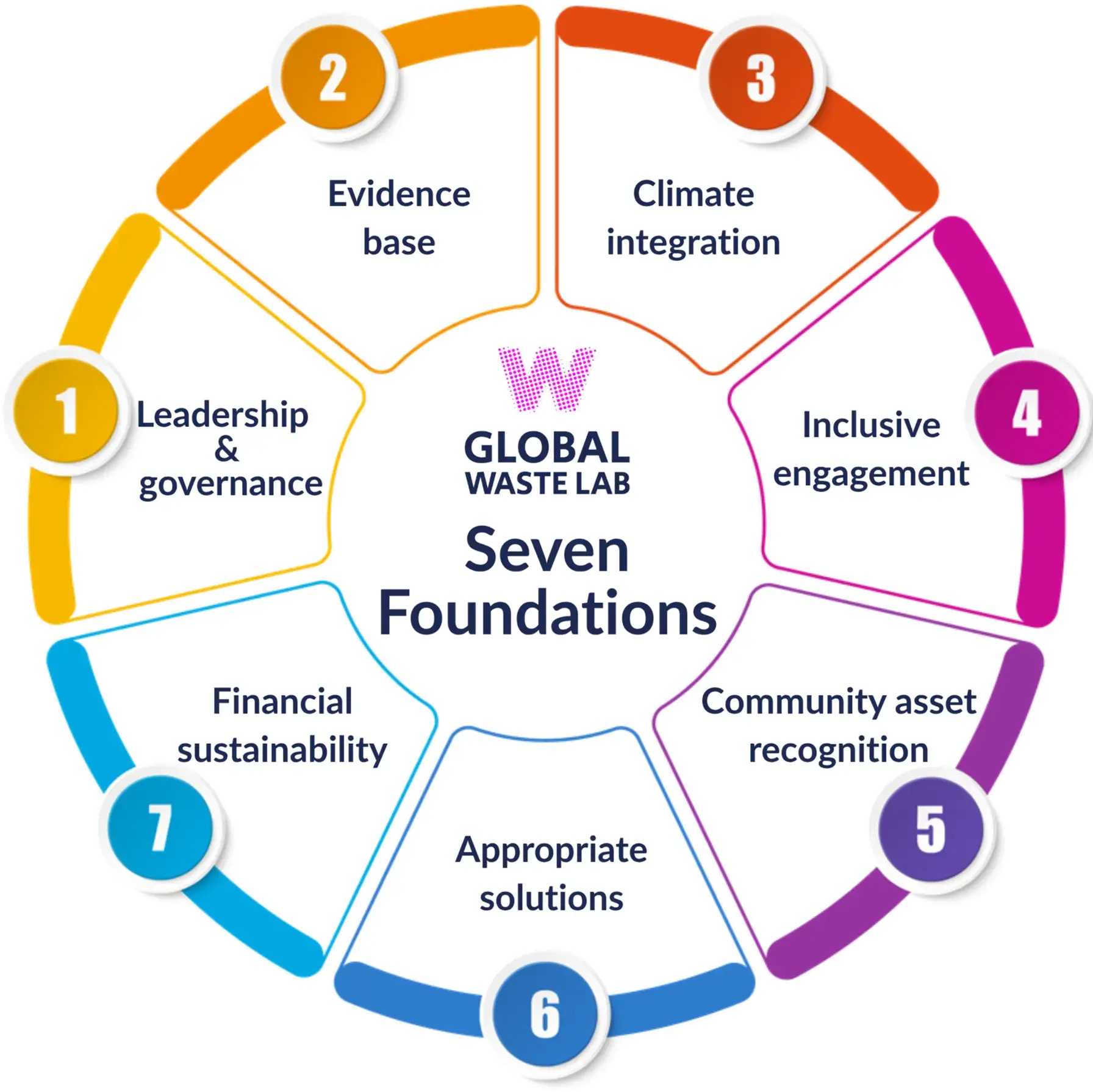
The Global Waste Lab Resilience Review is a 15-minute diagnostic based on our Seven Foundations of Resilient Waste Systems, shown here.
Designed for funders, donors, development organisations and programme teams, it helps you examine whether a waste management project has the foundations it needs to become a locally owned system that lasts.
Explore where those foundations are strong, where gaps could undermine progress, and what needs attention next.
The Challenge
Investment in waste management does not always translate into reliable, lasting services. Projects can deliver equipment, facilities and training, yet communities may continue to face uncollected waste, open dumping and burning.
What gets overlooked
Technology and infrastructure depend on the systems around them: clear responsibilities, reliable evidence, community participation, appropriate skills and dependable funding.
The Seven Foundations help you examine these conditions together, so you can identify gaps that could undermine a project’s long-term success.
The Global Waste Lab Resilience Review helps you assess a waste management project against the Seven Foundations, identifying strengths and gaps that could affect its ability to deliver lasting services.
Developed by Global Waste Lab founder Zoë Lenkiewicz, lead author of UNEP’s Global Waste Management Outlook 2024, the review draws on research undertaken for the Outlook and practical experience in low- and middle-income contexts.
In around 15 minutes, you’ll receive:
- A profile of the project’s strengths and gaps across all seven foundations
- Insight into risks that could undermine local ownership and reliable services
- Priorities to address before committing funding, expanding or replicating the project
- Practical recommendations to strengthen the project’s resilience

Who this is for:

Impact investors
Identify gaps in project foundations that could put long-term delivery and impact at risk.
Development organisations
Identify what needs strengthening in waste management projects before expanding or replicating them.
Donors and foundations
Assess whether the projects you support are building local ownership and the capacity to sustain services.
Development banks
Use the Seven Foundations to inform early project discussions and identify areas needing closer assessment.
What you’ll receive
Complete the free, 15-minute review and we’ll email you a personalised report based on your answers about the project you’re assessing.
Your Resilience Review report will include:
-
An indicative rating for each of the Seven Foundations
-
Feedback on strengths and gaps that could affect lasting services and local ownership
-
Practical recommendations to help you prioritise what to strengthen next
About the Framework
Global Waste Lab’s Seven Foundations of Resilient Waste Systems are leadership and governance, evidence base, climate integration, inclusive engagement, community asset recognition, appropriate solutions, and financial sustainability.
Developed by Zoë Lenkiewicz, the framework draws on research undertaken for UNEP’s Global Waste Management Outlook 2024 and practical experience in low- and middle-income contexts.
The foundations are interconnected. Strong performance in one area cannot fully compensate for gaps in another. Together, they help you look beyond individual activities or facilities to the conditions needed for reliable, locally owned waste services.

Turn your results into practical next steps
Complete the Resilience Review and receive a personalised report in around 15 minutes.
Your review will help you see which foundations are strongest, which need attention, and what practical steps could make the project more resilient.