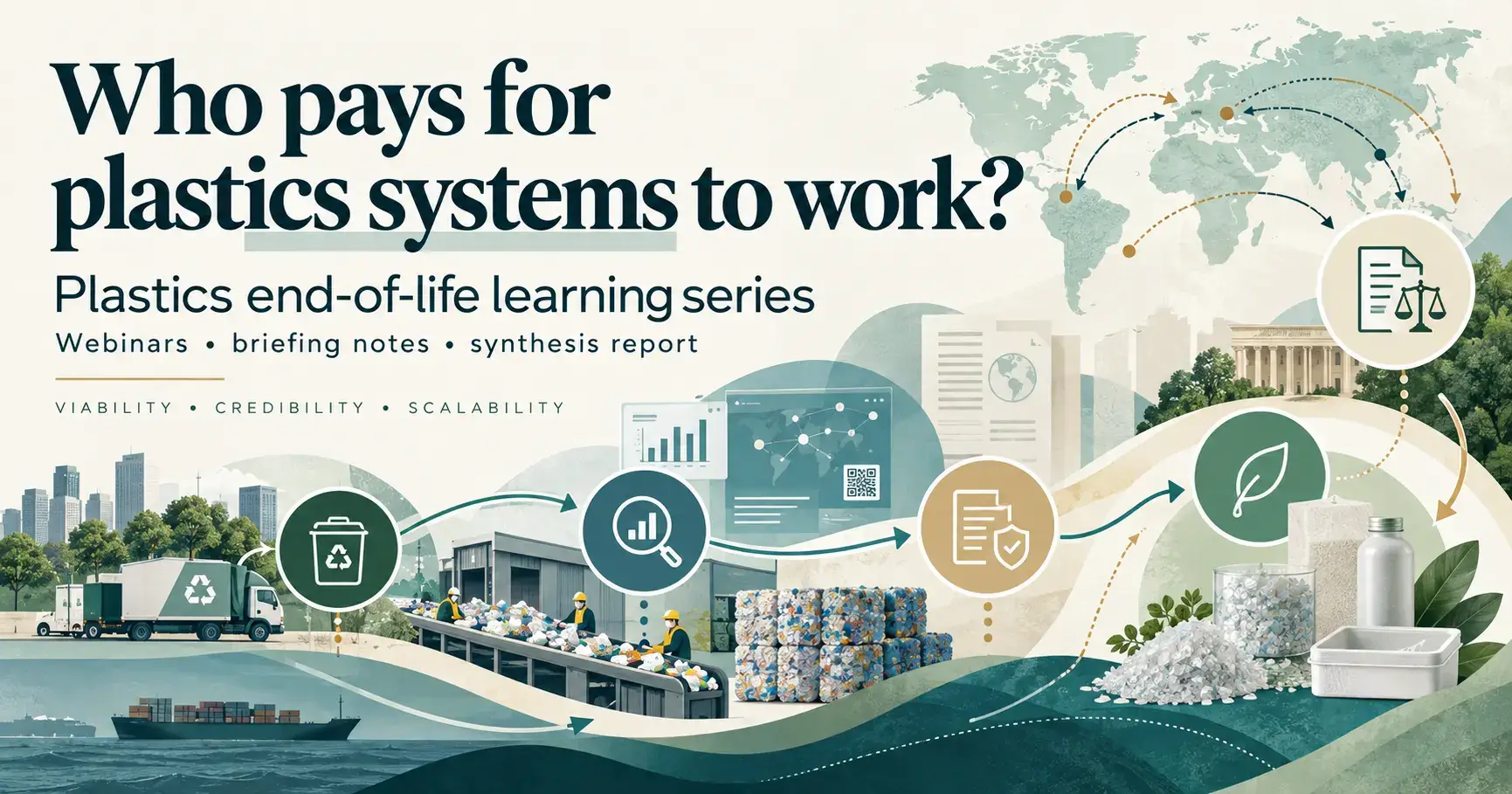
Extended Producer Responsibility, or EPR, is based on a simple idea: companies that put products on the market should contribute to the cost of managing them when they become waste.
But when used products are exported for reuse, the products move while the funding collected for their eventual end-of-life management usually stays in the country where they were first sold.
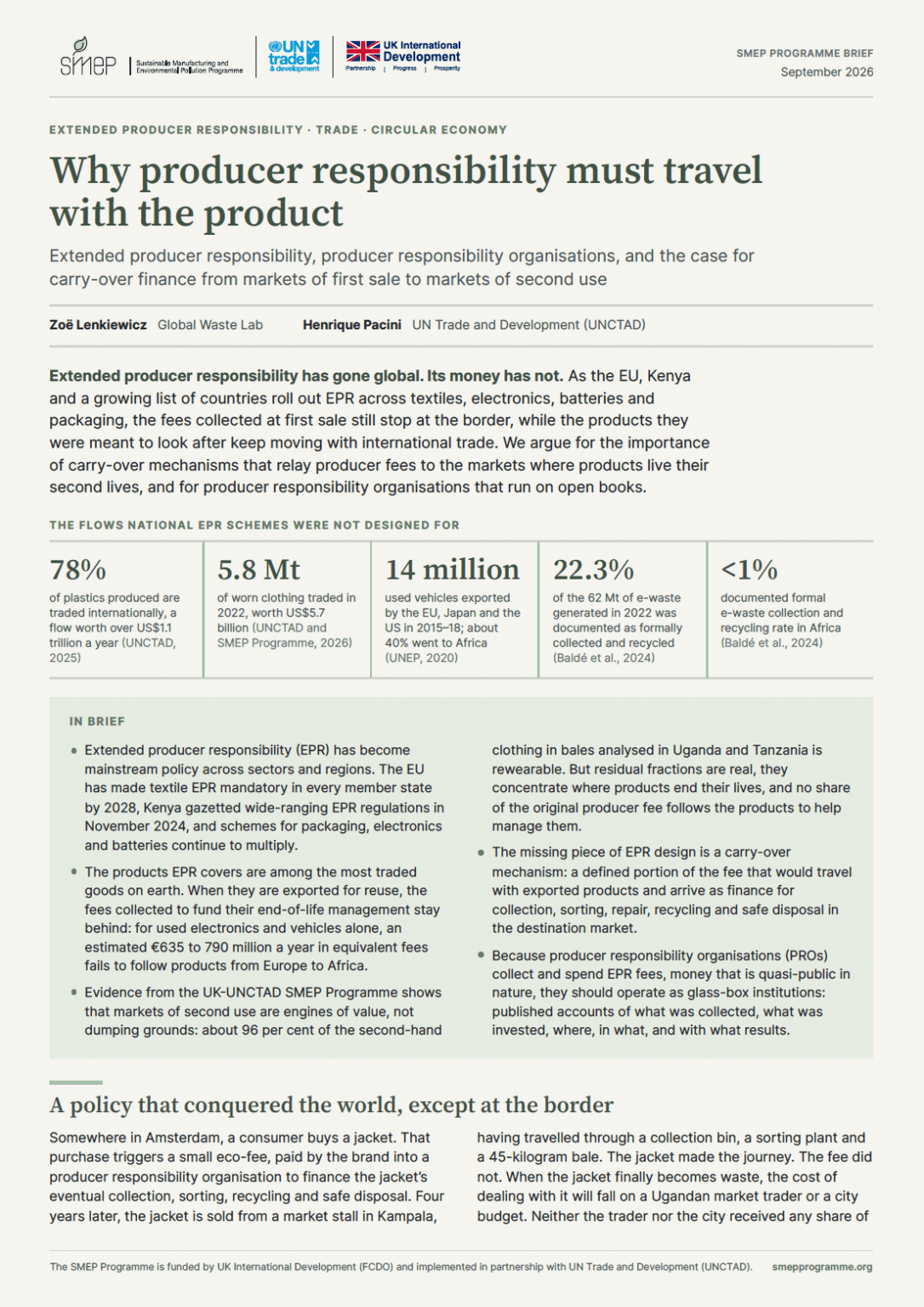
For used electronics and vehicles alone, we estimate that €635–790 million a year in producer responsibility funding does not follow products exported from Europe to Africa.
In a new paper for the SMEP Programme, Henrique Pacini and I argue that a defined share of producer responsibility funding should travel with exported products to the countries where they are eventually managed.
We also argue for much greater transparency from Producer Responsibility Organisations, including clearer reporting on what they collect, where the money goes, what it pays for and what results it achieves.
About the paper
This paper was written by Zoë Lenkiewicz, Founder and Director of Global Waste Lab, and Henrique Pacini of UNCTAD as part of the SMEP Programme.
It explores how Extended Producer Responsibility could better reflect the international movement of used products, and how funding could more fairly support the waste systems that ultimately manage them.
If you work on EPR, international waste flows or waste system design, I’d be very interested to hear your views.