Plastic recovery does not succeed through collection alone. Systems also need viable markets, reliable data, credible standards, effective regulation, infrastructure and clarity over who pays for the costs that material revenues do not cover.
In 2026, Global Waste Lab developed a three-part learning series for the Sustainable Manufacturing and Environmental Pollution (SMEP) Programme, bringing together practitioners, policymakers and researchers to explore what makes plastics systems viable, credible and scalable. More than 230 participants from around 50 countries joined the webinars.
The series was funded by the UK Foreign, Commonwealth & Development Office (FCDO) and delivered with UNCTAD, SouthSouthNorth and Pegasys. Global Waste Lab designed and moderated the webinars and produced the accompanying briefing notes and synthesis.
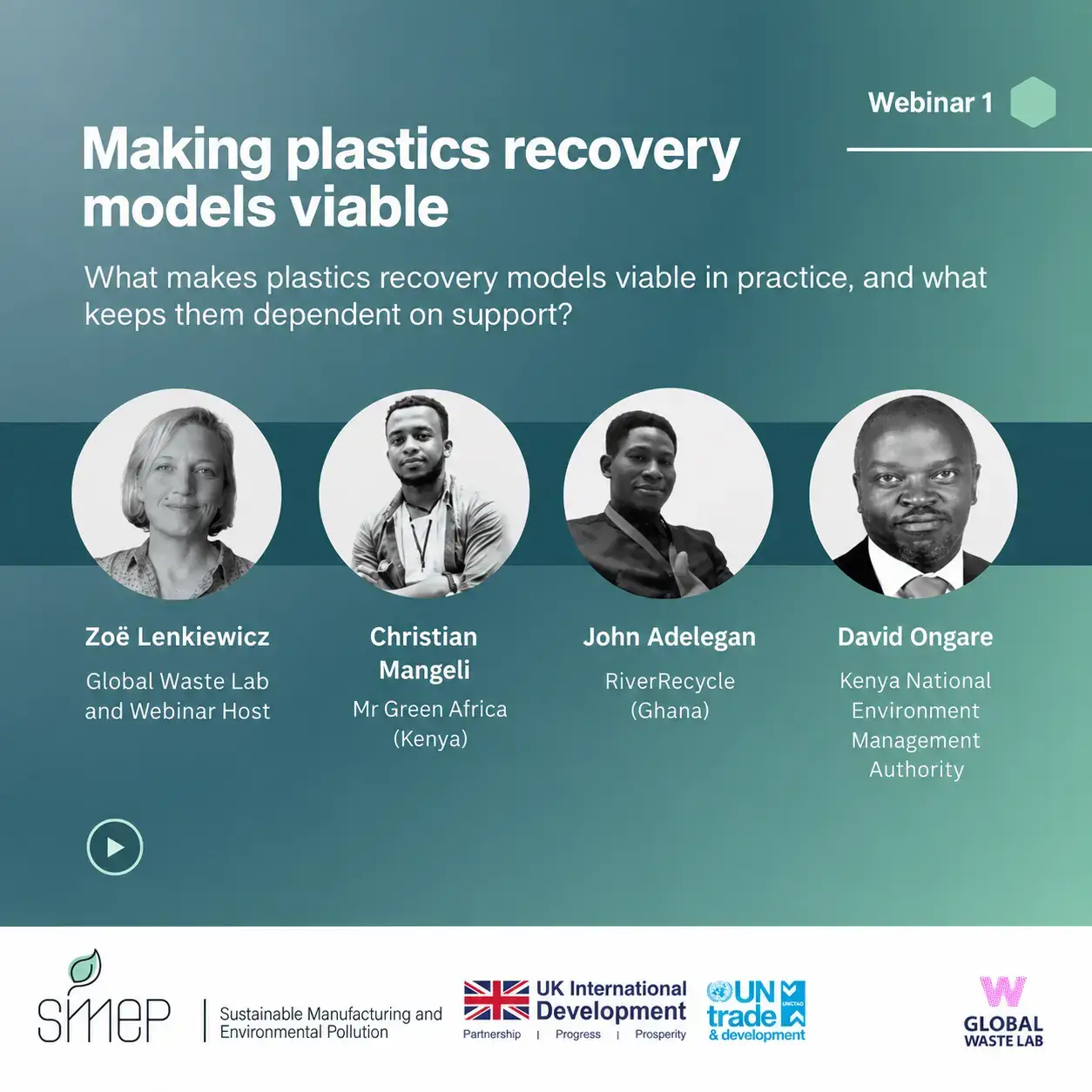
Webinar 1: Making plastics recovery models viable
Plastics recovery is not just a technical challenge. Viability also depends on revenue models, market access, links with municipal and informal systems, and the ability to adapt as conditions change.
Featuring: Christian Mang’eli – Mr Green Africa · John Adelegan – RiverRecycle · David Ongare – Kenya NEMA
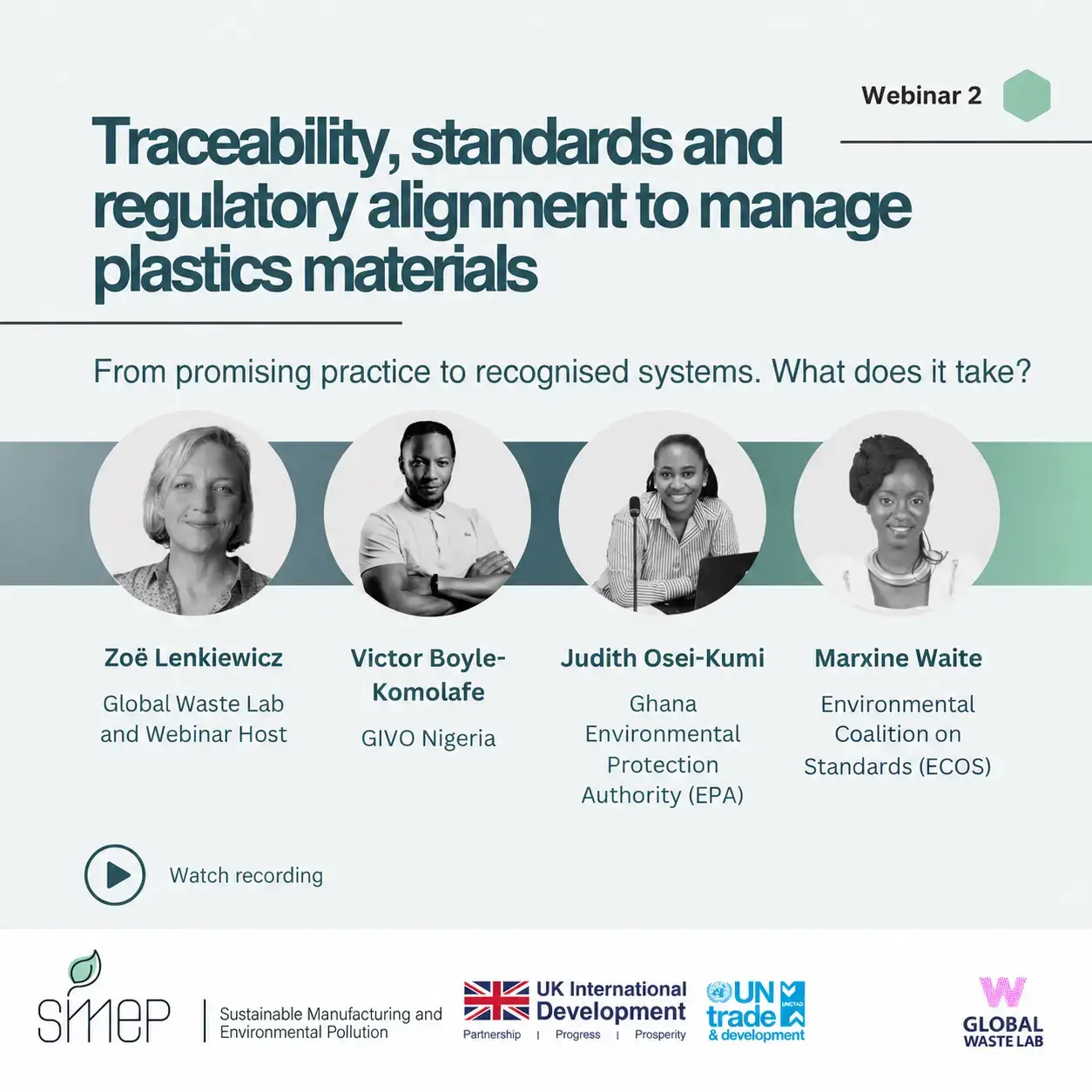
Webinar 2: Building credible plastics recovery systems
Traceability, credible data and workable standards help turn promising plastics recovery practices into systems that regulators, investors and markets can trust.
Featuring: Victor Boyle-Komolafe – GIVO Nigeria · Judith Osei-Kumi – Ghana Environmental Protection Authority · Marxine Waite – Environmental Coalition on Standards (ECOS)
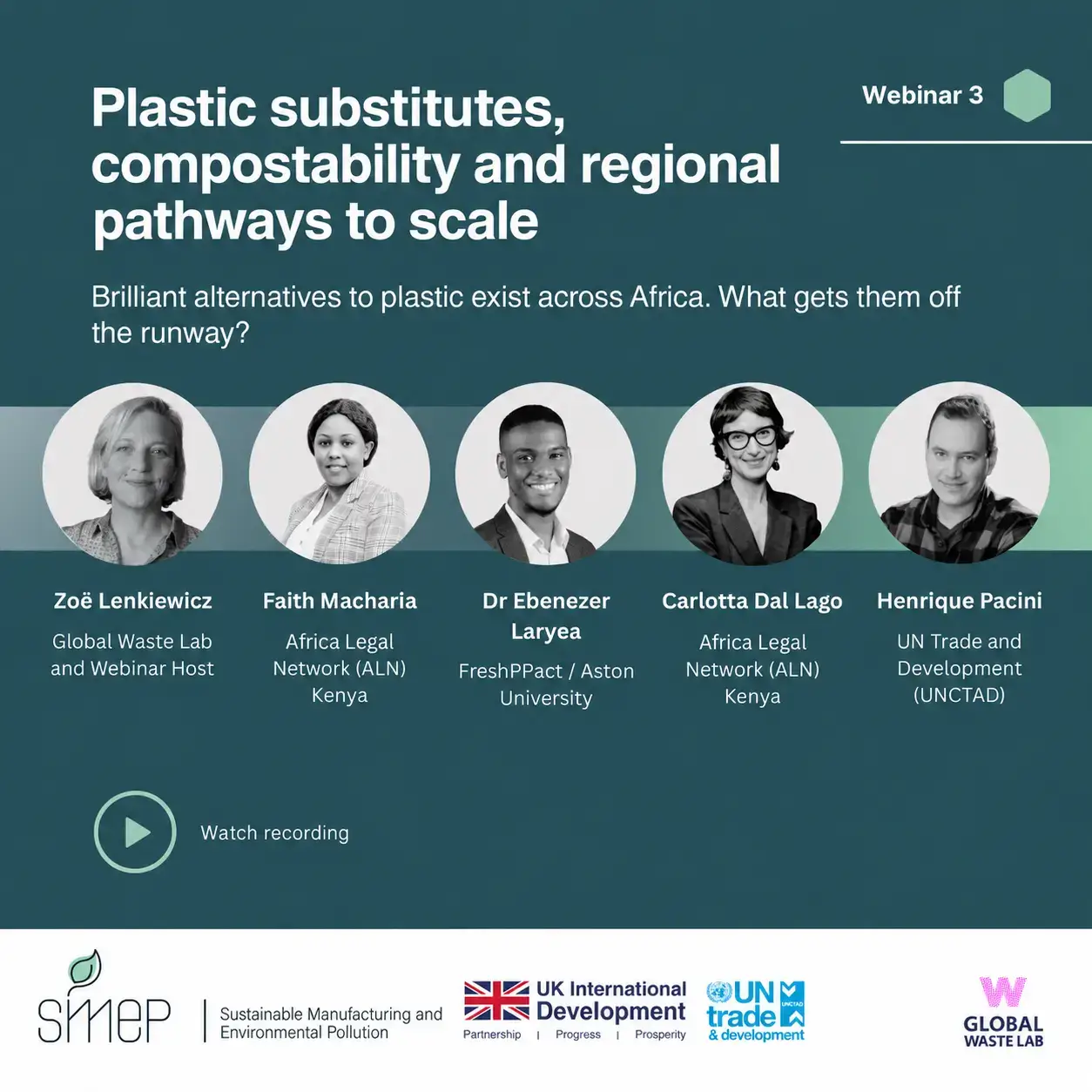
Webinar 3: Scaling plastic substitution and regional policy
Alternatives to problematic plastics already exist, but scaling them requires more than a good product. Standards, incentives, market conditions, trade rules and regional policy all shape whether they succeed.
Featuring: Faith Macharia – Africa Legal Network (ALN) Kenya · Dr Ebenezer Laryea – FreshPPact / Aston University · Carlotta Dal Lago – Africa Legal Network (ALN) Kenya · Henrique Pacini – UN Trade and Development (UNCTAD)
Bringing the learning together
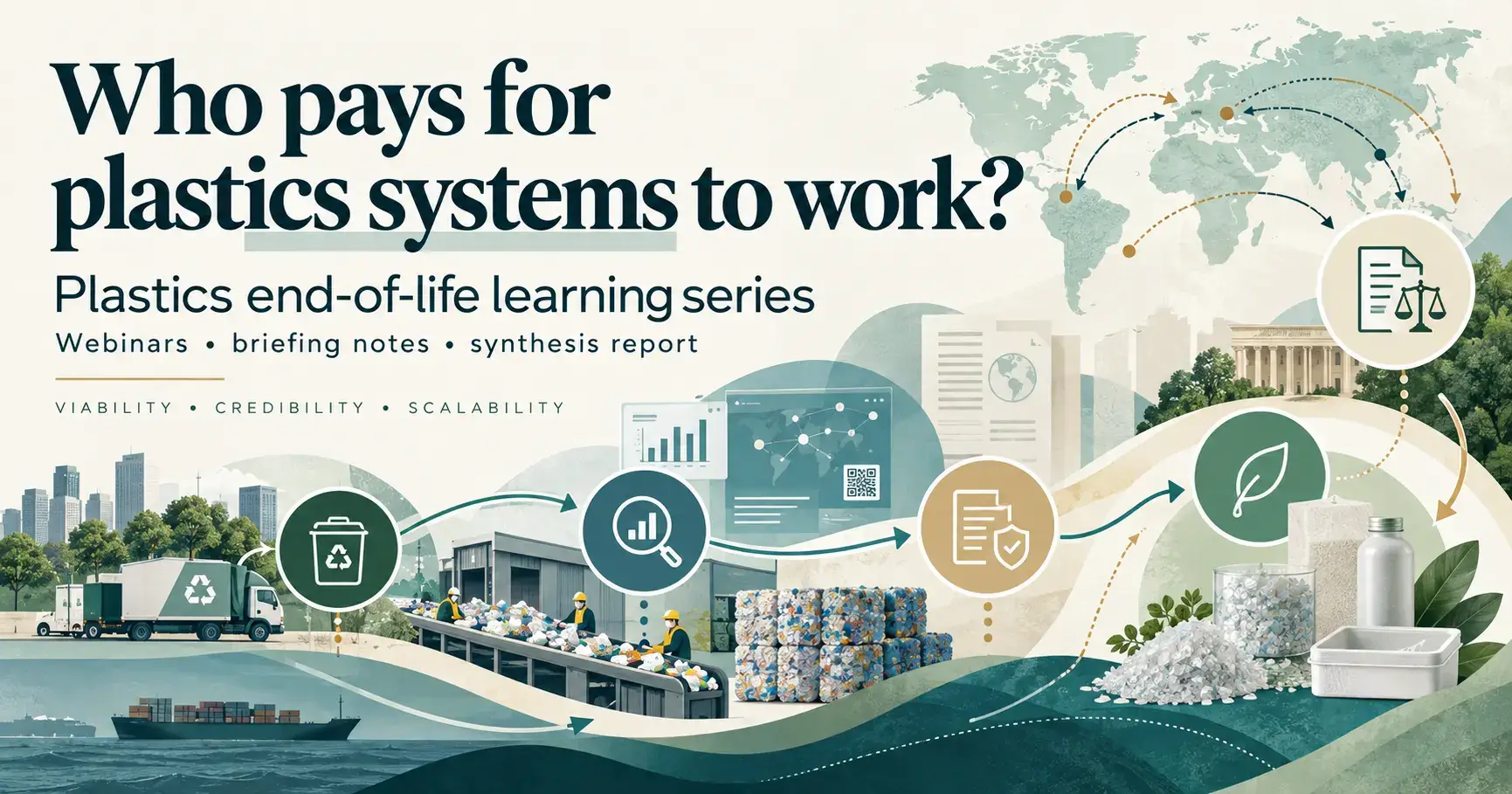
Who pays for plastics systems to work?
Across the three webinars, the same underlying question kept returning: who pays for the parts of plastics systems that markets do not cover?
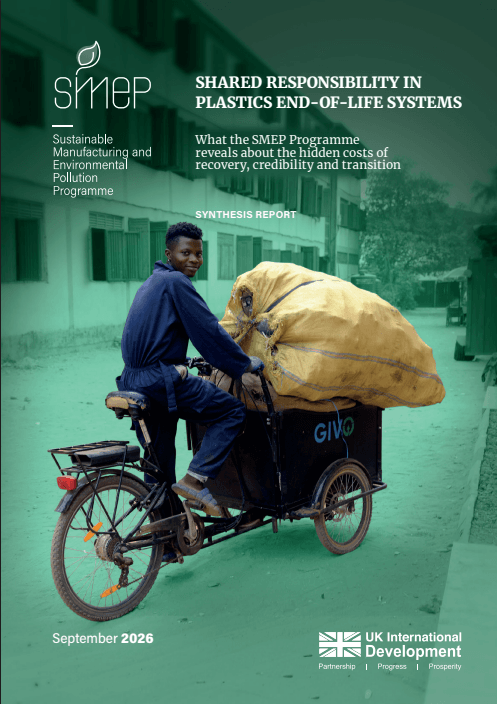
The synthesis report brings together the learning from across the series, looking at how financing, extended producer responsibility, data and traceability, standards, regional coordination and informal sector inclusion interact in practice.
Its central message is that plastics systems do not become viable, credible or scalable through individual projects alone. The wider policy, financing and institutional conditions also need to work – and financial responsibility needs to reach the places where the real costs of collection, recovery and disposal are incurred.